The Underwater Legacy of ‘Marine Boy’: A Dive into the 1960s Animated Classic
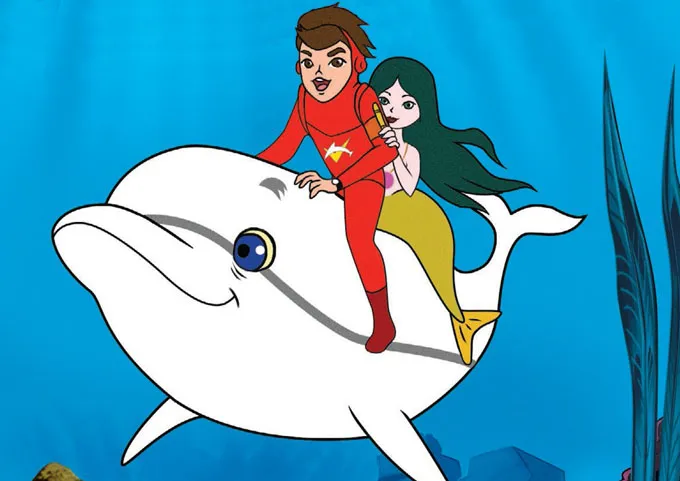
In the mid-1960s, a new type of hero emerged from the depths of the ocean, captivating audiences both in Japan and across the Pacific in the United States. “Marine Boy,” one of the first color anime series, swam its way into the hearts of children with its adventurous spirit, imaginative underwater world, and a memorable cast of characters. As one of the earliest Japanese anime shows to be adapted for American television, “Marine Boy” not only laid the groundwork for future anime imports but also left an indelible mark on the history of animation.
Origins and Production in Japan
“Marine Boy,” originally titled “Kaitei Shōnen Marīn,” was produced by Japan’s Terebi Doga (later known as Tokyo Movie Shinsha, or TMS Entertainment). The series first aired in Japan in 1965, and it was among the first anime to be produced in color, making it visually striking for its time. The show was the brainchild of Minoru Adachi, a prominent figure in Japanese animation, who envisioned a series that combined futuristic technology with the allure of the ocean’s mysteries.
Set in a near-future world where the ocean had become a new frontier for exploration and conflict, “Marine Boy” followed the adventures of a young boy named Marine, who worked as an operative for the Ocean Patrol—a global organization dedicated to maintaining peace in the world’s seas. Armed with a range of futuristic gadgets, including his iconic Oxy-gum (which allowed him to breathe underwater) and a boomerang-like weapon called the Sonic Belt, Marine Boy tackled a variety of threats, from underwater villains to giant sea creatures.
The American Adaptation
In 1966, “Marine Boy” was brought to American audiences by Seven Arts Television, which acquired the rights to the show and made several changes to cater to the Western market. The series was dubbed into English and underwent minor edits to make it more suitable for American children. The adaptation was a success, and “Marine Boy” became one of the earliest Japanese anime series to gain popularity in the United States, predating more famous titles like “Speed Racer” and “Astro Boy.”
The American version retained much of the original show’s charm and adventure, though it toned down some of the darker elements present in the Japanese version. The episodes were restructured for a more episodic format, allowing for easier syndication. Despite these changes, “Marine Boy” maintained its core appeal—its imaginative depiction of underwater adventure and the strong moral character of its young protagonist.
Voice Actors and Cast
One of the key factors contributing to the success of “Marine Boy” in the United States was the talent behind its English-language voice cast. The voices brought a new dimension to the characters, helping to make them relatable and memorable for American audiences.
- Marine Boy was voiced by Corinne Orr, who also provided voices for several other characters. Orr was a prolific voice actress during this era and is perhaps best known for her work on “Speed Racer,” where she voiced both Trixie and Spritle. Her portrayal of Marine Boy gave the character a youthful, earnest quality that resonated with viewers.
- Pipper the Dolphin, Marine Boy’s loyal aquatic companion, was voiced by Sandy Becker, a well-known radio and television personality. Becker’s ability to infuse Pipper with personality, despite the character’s non-verbal nature, added a layer of charm to the show.
- Dr. Mariner, Marine Boy’s father and the chief scientist of the Ocean Patrol, was voiced by Jack Grimes. Grimes was an experienced voice actor who brought gravitas to the character, providing a steady, authoritative presence amidst the show’s action-packed scenes.
- Splasher the Whale, another of Marine Boy’s animal allies, was voiced by Peter Fernandez, who also served as a writer and voice director for the show. Fernandez was a major figure in the world of American anime dubbing, best known for his work on “Speed Racer.”
Legacy and Influence
Though “Marine Boy” only ran for 78 episodes, its impact on the world of animation was significant. It paved the way for future anime imports and helped introduce American audiences to the unique storytelling style of Japanese animation. The show’s blend of futuristic technology, environmental themes, and high-stakes adventure set a precedent for many anime series that followed.
Even today, “Marine Boy” holds a special place in the hearts of those who grew up watching it. As a pioneer of anime in the West, it remains a nostalgic reminder of a time when the ocean was the ultimate frontier, and a young boy with a brave heart could save the world.